I Thought My Pizza Was Contaminated Until I Learned the Surprising Truth About Those Strange Bubbles
After a long exhausting day, all I wanted was a quiet evening and a hot pizza delivered to my door.
Nothing complicated.
Just comfort food, a movie, and a chance to relax without thinking too much about anything.
So when the delivery driver finally arrived that evening, I barely waited to close the door before carrying the pizza box straight to the kitchen counter. The smell alone was enough to make me hungry all over again. Melted cheese, garlic, warm crust—it smelled exactly the way a good pizza should.
But the moment I opened the box, something felt wrong.
Very wrong.
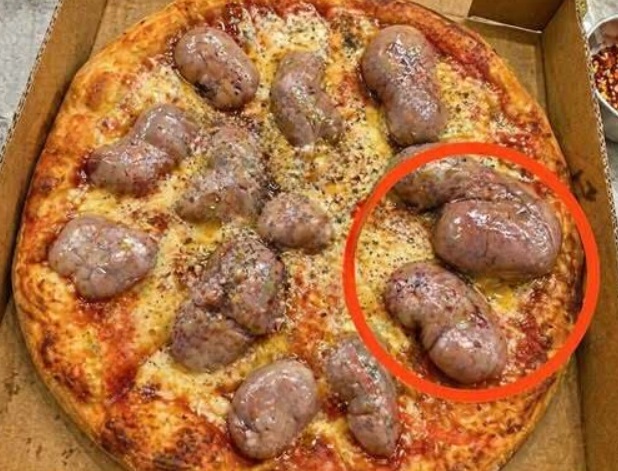
Instead of the normal smooth layer of bubbling cheese and evenly spread toppings, the surface looked distorted. Huge swollen bubbles pushed upward through the cheese like strange inflated blisters. Some were pale and glossy while others looked stretched so tightly that they seemed ready to burst.
I froze.
For a second, my brain genuinely struggled to process what I was looking at.
The shapes didn’t look edible. They looked unnatural—almost biological. One giant bubble near the center reflected the kitchen light in a way that made it appear oddly alive.
My appetite disappeared instantly.
I leaned closer carefully, studying the pizza like it was evidence in some kind of crime scene investigation. The more I stared at it, the stranger it seemed.
Was this normal?
Had the pizza somehow gone bad during cooking?
Was it contaminated?
Suddenly, my relaxing evening turned into a full-blown mystery.
I grabbed my phone and zoomed in on the surface, trying to understand what exactly had happened in that oven. One bubble was nearly the size of a golf ball, sitting under a thin layer of melted cheese that looked ready to collapse at any second.
Against my better judgment, I poked one gently with a fork.
It deflated instantly.
That somehow made it even creepier.
My imagination immediately started creating terrible explanations. Maybe there had been some issue with the dough. Maybe chemicals had reacted strangely under heat. Maybe it was spoiled cheese or trapped gas from something unsafe.
The possibilities kept getting worse the longer I looked.
And yet I couldn’t stop staring.
The pizza sat there in front of me, smelling completely normal while looking increasingly suspicious. It created this bizarre conflict in my brain where one part of me still wanted dinner while another part was convinced I might be looking at something dangerous.
Eventually, curiosity won.
I opened my laptop and started searching online for “weird pizza bubbles” and “large blisters under cheese.”
To my surprise, dozens of photos appeared instantly.
And every single one looked exactly like my pizza.
Apparently, this happens far more often than most people realize.
As I read through cooking forums and pizza discussions, the mystery finally started making sense. Those strange swollen bubbles weren’t signs of contamination or spoiled ingredients at all. They were simply pockets of steam and trapped air created during the baking process.
When pizza cooks at very high temperatures, moisture inside the dough and cheese rapidly turns into steam. In some areas, the melted cheese forms a seal over tiny pockets of air. As heat continues building underneath, those pockets inflate dramatically, creating the large glossy domes I had mistaken for something dangerous.
In other words, my terrifying pizza was completely normal.
More than normal, actually.
Some people intentionally try to create those bubbles because they believe it improves texture and flavor.
I sat back in my chair laughing at myself.
Only minutes earlier, I had been convinced I was staring at some horrifying kitchen disaster. Now I was learning that professional pizza ovens create these bubbles all the time.