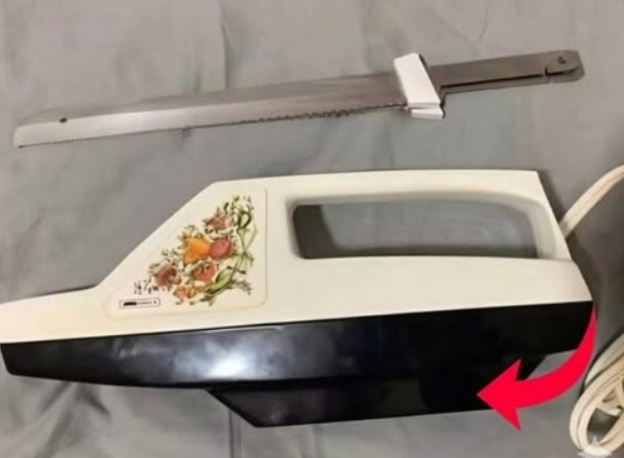
The Vintage Kitchen Tool That Looks Like a Clothes Iron—But Was Designed for Carving Food
Introduction: When Kitchen Design Was Bold, Creative, and Unexpected
Walk into a modern kitchen today and most appliances share a similar design language. Stainless steel finishes, smooth surfaces, and minimalistic shapes dominate store shelves. While these designs are sleek and practical, they often look quite similar to one another.
However, if you look back a few decades, kitchen appliances told a very different story.
During the mid-20th century, especially from the 1950s through the 1980s, household products were often designed with personality and flair. Manufacturers experimented with colorful patterns, unique shapes, and playful designs that made everyday tools stand out.
One of the most surprising examples from that era is a retro electric carving knife that closely resembles a vintage clothing iron.
At first glance, many people assume the device must be intended for pressing clothes. Its compact shape, curved handle, and decorative exterior look almost identical to a classic household iron.
Instead, it was created as a kitchen tool designed to slice cooked meats quickly and evenly.
For many families, this appliance became a familiar part of holiday dinners, special gatherings, and large family meals.
Today, it is remembered as a fascinating example of vintage kitchen innovation—combining distinctive design with practical functionality.
First Impressions: Why It Looks Like an Iron
When people encounter this retro appliance for the first time, confusion is common.
The design closely mirrors the silhouette of a traditional clothes iron:
• A compact base
• A curved handle positioned above the body
• A flat underside where the cutting mechanism sits
• Decorative patterns on the exterior
Some models even feature colorful floral prints or pastel finishes, making them appear more like decorative household items than culinary tools.
This resemblance was not entirely accidental.
Designers of that era often borrowed familiar shapes from other household objects to make appliances feel intuitive and comfortable to hold.
The iron-like handle, for example, allows users to grip the device firmly while guiding it across food during carving.
In other words, what initially looks like a surprising design choice actually serves a practical purpose.
What the Gadget Actually Does
Despite its unusual appearance, the appliance is simply an electric carving knife.
Electric carving knives were developed to make slicing large pieces of cooked meat easier and more consistent.
Traditional carving knives require steady hand pressure and careful technique to create even slices. When carving large roasts, poultry, or similar dishes, maintaining smooth cuts can sometimes be challenging.
Electric carving knives solve this problem by using a small motor that moves the blades rapidly back and forth.
This motion allows the tool to cut through food with minimal effort from the user.
The result is often:
• Cleaner slices
• More consistent thickness
• Less physical strain during carving
For hosts preparing large meals, this efficiency was particularly appealing.
How Electric Carving Knives Work
Although designs vary slightly between manufacturers, most electric carving knives follow the same basic principle.
Inside the device is a compact electric motor connected to two serrated blades.
When the appliance is switched on, the blades move rapidly in opposite directions.
This motion creates a sawing action that cuts through meat smoothly.
The user simply holds the handle and gently guides the blades through the food while the motor performs the cutting work.
Because the blades move quickly, the tool can slice through roasted meats with minimal pressure.
This reduces tearing and helps preserve the texture of the food.
The Golden Age of Electric Carving Knives
Electric carving knives became especially popular between the 1960s and the 1980s.
During this period, household technology was evolving rapidly. Many families were eager to adopt new appliances that promised convenience in the kitchen.
Products that simplified cooking tasks were particularly appealing.
Electric carving knives fit perfectly into this trend.
They offered several advantages:
• Faster carving during large meals
• Consistent slices for serving
• A modern, high-tech appearance
Manufacturers promoted these tools as innovative kitchen helpers that could make meal preparation easier and more enjoyable.
Holiday Meals and Family Gatherings
One reason electric carving knives gained popularity was their connection to special occasions.
Large roasted dishes—such as turkey, ham, or roast beef—are often served during holidays and family celebrations.
Carving these dishes at the table can be both a practical task and part of the dining experience.
For hosts preparing meals for many guests, electric carving knives provided an efficient way to handle the job.
The tool allowed them to carve portions quickly while maintaining an elegant presentation.
In some households, the moment of carving became a small event during the meal.
Guests gathered around the table while the host demonstrated the modern gadget.
The Appeal of Mid-Century Appliance Design
Beyond functionality, retro kitchen gadgets are admired today for their distinctive design.
During the mid-20th century, manufacturers embraced creativity in ways that feel quite different from modern appliance aesthetics.
Design features from that era often included:
• Bright colors
• Decorative patterns
• Rounded shapes
• Plastic casings in pastel tones
• Bold logos or branding
These design elements reflected the optimism and innovation of the time.
Household appliances were not just tools—they were also part of home decor.
Why the Iron-Like Shape Worked Well
The unusual shape of this carving knife actually served several ergonomic purposes.
The elevated handle allowed users to maintain a comfortable grip while guiding the blades.
The compact body provided balance and control during carving.
Meanwhile, the flat underside positioned the blades close to the food surface, making slicing easier.
In other words, the design was both visually distinctive and functional.
Even though it resembles a clothing iron, the shape works surprisingly well for its intended purpose.
Materials and Construction
Vintage electric carving knives were typically built using durable materials designed for repeated use.
Common components included:
• A plastic outer casing
• Stainless steel serrated blades
• Internal electric motor
• Detachable blade system for cleaning
The blades were often removable so they could be washed separately from the motor housing.
This design made cleaning easier and improved hygiene during food preparation.
Safety Considerations
Like any powered kitchen tool, electric carving knives were designed with safety features.
Many models included:
• Protective blade guards
• Safety switches to prevent accidental activation
• Easy-grip handles for stability
Users were encouraged to operate the device carefully and keep fingers clear of the moving blades.
When used correctly, the tool could simplify carving tasks significantly.
Why These Gadgets Became Less Common
Although electric carving knives were once popular, they are less commonly seen in modern kitchens today.
Several factors contributed to this shift.
First, many people now cook smaller meals, reducing the need for specialized carving tools.
Second, improvements in traditional knives have made manual carving easier.
High-quality chef’s knives can often handle many slicing tasks effectively.
Third, minimalist kitchen trends have encouraged consumers to reduce the number of specialized gadgets they own.
As a result, electric carving knives are now less widely used than they once were.
The Rise of Retro Appliance Collecting
Even though these devices are less common in everyday cooking today, they remain popular among collectors.
Vintage kitchen enthusiasts often seek out retro appliances because they represent an era of creative design and technological optimism.
Electric carving knives that resemble irons are particularly interesting because of their unusual appearance.
Collectors appreciate them for several reasons:
• Unique design
• Nostalgic value
• Historical significance
• Functional craftsmanship
Many of these tools still work perfectly decades after they were manufactured.
Nostalgia and Family Memories
For many people, retro kitchen appliances evoke memories of family gatherings.
The sight of an electric carving knife might remind someone of holiday dinners, festive celebrations, or time spent in the kitchen with relatives.
These emotional connections contribute to the continued interest in vintage gadgets.
Objects from earlier decades often serve as reminders of shared traditions and special moments.
Decorative Display in Modern Kitchens
Some vintage kitchen enthusiasts choose to display retro appliances as decorative pieces rather than using them regularly.
Their colorful patterns and distinctive shapes can add character to modern kitchens.
Placed on a shelf or countertop, an electric carving knife with floral decorations can become a conversation starter.
Guests may initially assume it is a vintage iron before learning about its real purpose.
Retro Design Inspiration for Modern Products
Interestingly, the charm of mid-century appliance design has influenced modern product designers as well.
In recent years, several companies have introduced kitchen appliances inspired by retro aesthetics.
These modern versions combine nostalgic appearance with updated technology.
The popularity of vintage-style coffee makers, toasters, and mixers shows that many people appreciate the warmth and creativity of earlier design styles.
The Lasting Value of Practical Tools
Despite changing trends, the original purpose of the electric carving knife remains relevant.
For people who frequently prepare large roasted meals, the tool can still be very useful.
Its ability to create smooth slices quickly continues to appeal to many home cooks.
Even today, some kitchens keep an electric carving knife specifically for special occasions.
Appreciating Kitchen History
Looking at vintage appliances also provides insight into the history of home cooking.
Each generation develops tools that reflect its priorities and lifestyle.
The electric carving knife represents a period when technology was rapidly entering the home and promising new convenience.
Manufacturers were eager to create innovative gadgets that could simplify everyday tasks.
At the same time, they embraced bold design choices that made appliances visually distinctive.
Why Retro Gadgets Continue to Fascinate People
Objects from earlier decades often capture our attention because they show how everyday life has evolved.
A kitchen tool that looks like an iron but slices food illustrates how creative product design once was.
It reminds us that innovation does not always follow predictable paths.
Sometimes the most memorable designs are the ones that surprise us.
A Blend of Style and Function
Ultimately, the retro electric carving knife demonstrates a balance between practicality and creativity.
Its motorized blades perform a useful task in the kitchen.
Meanwhile, its iron-inspired shape and decorative exterior give it personality.
This combination of style and function helped make it memorable.
Conclusion: A Unique Piece of Kitchen History
At first glance, the vintage gadget might appear to be a decorative household iron.
But a closer look reveals a clever kitchen tool designed to slice meats efficiently.
Electric carving knives like this one reflect an era when appliance designers embraced bold ideas and distinctive shapes.
Although modern kitchens may rely on different tools today, these retro devices remain a fascinating reminder of how innovation and creativity once shaped everyday cooking.
Whether displayed as a nostalgic collectible or used during special meals, the iron-shaped carving knife continues to capture curiosity.
It stands as a small but memorable example of how practical tools and imaginative design have always gone hand in hand in the world of home kitchens.