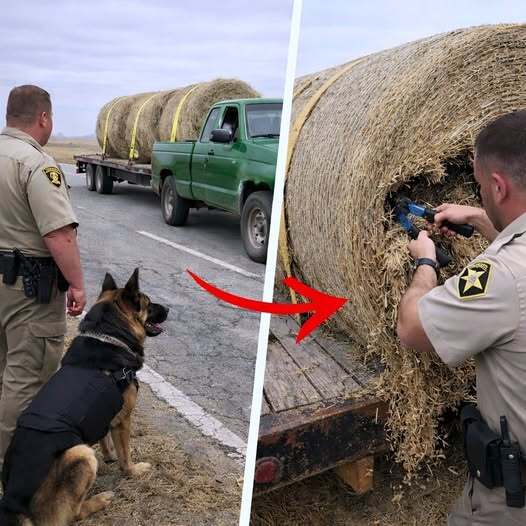
Vigilance on the Open Road: How Awareness and a K9 Unit Supported a Complex Highway Investigation
Highways are often associated with freedom, movement, and connection. They link cities, towns, and rural areas, serving as essential pathways for commerce, travel, and daily life. For most individuals, a highway journey is routine—commuting to work, visiting family, or transporting goods from one location to another.
However, from the perspective of law enforcement, highways represent more than just infrastructure. They are dynamic environments where a wide range of situations can unfold. While many interactions are routine, officers must remain prepared for unexpected developments that require careful attention and quick decision-making.
Maintaining safety on these roadways involves more than monitoring speed limits or enforcing traffic laws. It requires observation, judgment, and the ability to recognize when something may not align with normal patterns. In some cases, these observations lead to discoveries that extend beyond routine enforcement and contribute to broader public safety efforts.
One important resource in this work is the use of K9 units—specially trained dogs that assist officers in detecting and responding to situations that may not be immediately visible.
This article explores an incident in which attentiveness and teamwork between an officer and a K9 partner played a key role in identifying a situation that required further investigation. While the event began as a routine patrol, it developed into a more complex scenario that highlighted the importance of training, awareness, and coordinated response.
Highway patrol officers operate in environments that are constantly changing. Unlike fixed locations, roadways involve continuous movement, with vehicles passing through at varying speeds and conditions.
Officers assigned to these duties must balance multiple responsibilities, including:
Monitoring traffic flow
Responding to accidents
Assisting motorists
Enforcing traffic regulations
Identifying unusual or potentially unsafe situations
Experience plays a significant role in this work. Over time, officers develop an understanding of typical patterns—how vehicles move, how drivers behave, and what constitutes normal conditions for a given area.
This familiarity allows them to notice subtle differences. For example, a vehicle that appears overloaded, a driver who seems unusually anxious, or inconsistencies in responses during a routine stop can all serve as indicators that further attention may be warranted.
It is important to note that such observations do not automatically indicate wrongdoing. Instead, they serve as prompts for additional assessment, ensuring that any concerns are addressed appropriately and safely.
The Importance of K9 Units in Law Enforcement
K9 units are an integral part of many law enforcement agencies. These units consist of trained dogs and their handlers, working together as a team to support a variety of operations.
Dogs used in these roles undergo extensive training to develop specific skills, including:
Detecting certain scents
Responding to commands and cues
Assisting in searches
Providing support during investigations
Their abilities complement those of human officers. For instance, a trained K9 can detect substances or conditions that may not be immediately apparent through visual inspection alone.
In addition to their technical capabilities, K9 units contribute to overall safety. Their presence can help manage situations, provide reassurance to officers, and support controlled, methodical approaches to inspections.
The partnership between an officer and a K9 is built over time. It requires consistent training, communication, and trust. Each partner learns to interpret the other’s signals, creating a coordinated approach that enhances effectiveness.
A Routine Patrol with Unexpected Developments
On a typical day, a highway patrol officer was conducting routine monitoring along a rural stretch of road. The area was characterized by agricultural activity, and it was common to see vehicles transporting goods such as produce, equipment, or livestock supplies.
During the patrol, a pickup truck towing a trailer came into view. At first glance, the vehicle appeared consistent with others in the area. However, certain details prompted closer observation.
The trailer, which appeared to be carrying agricultural materials, seemed to be bearing more weight than expected. Additionally, the driver’s behavior—frequent glances toward mirrors and a noticeable level of tension—stood out.
Individually, these factors might not have raised concern. Together, however, they suggested that it would be appropriate to conduct a standard traffic stop to ensure that everything was in order.
Conducting the Traffic Stop
Traffic stops are conducted according to established procedures designed to ensure safety for both the officer and the driver. The officer signaled for the vehicle to pull over in a safe location and approached in a controlled manner.
Initial interaction involved routine questions and observations. During this exchange, some inconsistencies in the driver’s responses became apparent. While this does not necessarily indicate a serious issue, it can justify further examination to clarify the situation.
At this point, the officer decided to use the available K9 unit to conduct an external inspection of the vehicle and trailer. This step is commonly used when there is reasonable cause to believe that additional assessment may be beneficial.
The K9 Inspection
The K9 partner began a systematic inspection of the vehicle’s exterior. These inspections are conducted in a controlled and methodical way, allowing the dog to assess different areas for any unusual indicators.
During the process, the dog displayed a noticeable change in behavior near a specific section of the trailer. Trained K9 units use consistent signals to communicate findings to their handlers, and this response indicated that further investigation was warranted.
This moment represented a shift in the situation. What had begun as a routine check now required a more detailed examination.