The Meaning Behind a Blue Stop Sign?s=Adoring the Retro Allure of Vintage Objects
At some point, almost everyone who’s driven has approached an intersection, expecting to see a familiar sight: a red, octagonal stop sign. It’s ingrained in our minds as the universal symbol for stopping. But imagine driving along and spotting something that makes you do a double-take—a blue stop sign. What does it mean? Should you stop? Is it some kind of mistake? Or is it part of a larger system of non-standard road signs you never knew existed?
Seeing a blue stop sign can feel confusing, even unsettling, because it goes against everything we’ve been taught about road signs. Red stop signs are the norm, so encountering a different color immediately raises questions. Why would someone replace the iconic red stop sign with blue? And more importantly, should we be stopping when we see one?
Though blue stop signs aren’t common, they do exist, and they have a specific purpose. Let’s delve into the meaning behind these unconventional signs, why they’re blue, where you can find them, and what to do if you encounter one.
What Is a Blue Stop Sign?
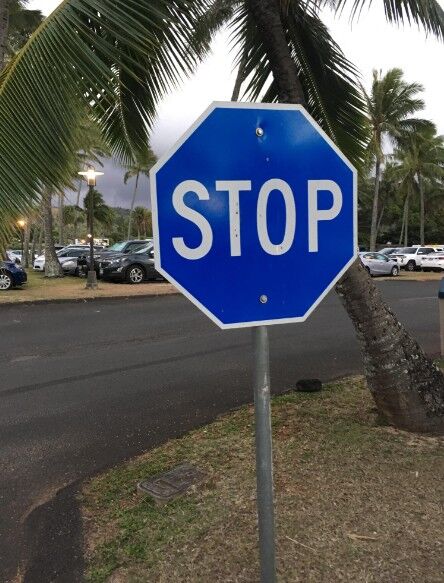
A blue stop sign looks almost identical to a traditional red stop sign—it’s still an octagonal shape and features the same white lettering that spells “STOP.” However, there is one critical difference: it’s blue. So, is this some new initiative, or is it just a mistake?
The reality is that blue stop signs are not legally recognized for traffic control in public areas, at least not in the United States. According to the Manual on Uniform Traffic Control Devices (MUTCD), which sets strict guidelines for all official road signs, stop signs must be red with white lettering. Blue, unfortunately, does not meet the standards set by the U.S. Department of Transportation. Therefore, blue stop signs are not officially used for government-regulated traffic control.
While these signs function like any other stop sign—telling drivers to come to a complete stop before proceeding—they are not part of the national traffic system. They are generally found in private areas, such as private communities, parking lots, campuses, or industrial sites.
Where Can You Find Blue Stop Signs?
Because blue stop signs do not follow the official standards, they are most commonly found outside public roadways, typically on private property. Here are some of the places where you might encounter a blue stop sign:
1. Private Communities or Gated Neighborhoods
In some private residential areas, such as gated communities, property owners may choose to install blue stop signs to indicate intersections or areas where traffic should be controlled. These signs are not legally required, but they help to guide traffic flow in a controlled environment.
2. Parking Lots
Parking lots—whether for businesses, shopping centers, or residential complexes—may also have blue stop signs. They are used to direct vehicles, especially in large parking structures where traffic can get congested. They’re intended to ensure safety, but they don’t have the same legal status as red stop signs on public streets.