When Nature Stuns: Inside the Anaconda Encounter That Shocked Wildlife Experts
When Nature Stuns: Inside the Anaconda Encounter That Shocked Wildlife Experts
Posted onApril 5, 2026 ByadminNo Commentson When Nature Stuns: Inside the Anaconda Encounter That Shocked Wildlife Experts
Few wildlife encounters capture the imagination quite like a face-to-face moment with one of the largest snakes on Earth. The sheer presence of an anaconda—silent, massive, and powerful—has long existed at the intersection of fear, fascination, and scientific curiosity. These reptiles are not just creatures of myth or viral videos; they are real, complex animals that play a critical role in some of the world’s most delicate ecosystems.
Recently, a team of experienced park rangers found themselves in a situation that would test both their training and their understanding of wildlife behavior. What began as a routine monitoring patrol quickly turned into a rare and high-stakes encounter with a massive anaconda. The situation, while dramatic, became an important case study in conservation, animal behavior, and the realities behind viral wildlife stories.
The Incident That Drew Global Attention
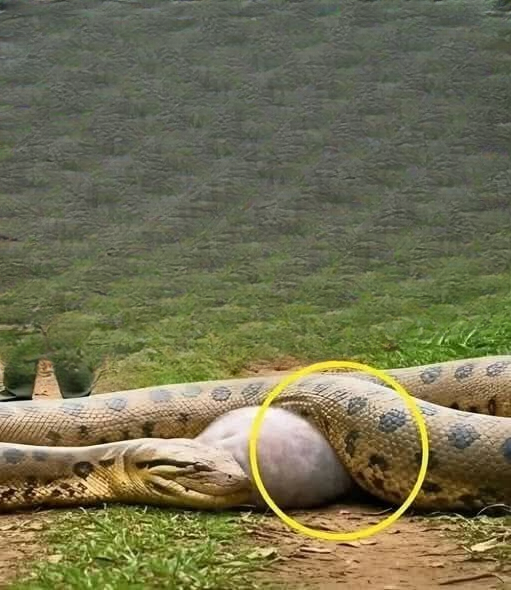
The encounter took place in a protected wildlife reserve where rangers routinely monitor animal activity to ensure ecological balance and visitor safety. On this particular day, something unusual caught their attention: an exceptionally large anaconda resting near a waterway, its body visibly swollen.
At first glance, it was clear the snake had recently fed. While this is normal behavior, the size of the bulge suggested that the prey item was unusually large. This raised immediate concerns.
Not because the snake had done anything unnatural—but because of where it was.
The area was relatively close to paths occasionally used by researchers and, at times, guided eco-tours. A massive predator in a vulnerable, slow-moving state posed a potential risk—not only to humans, but to itself.
Rangers knew they had to assess the situation carefully.
Why Intervention Became Necessary
In most cases, wildlife professionals avoid interfering with natural processes. Feeding, digestion, and rest are all part of an animal’s normal cycle. However, there are moments when observation alone is not enough.
In this case, several factors led to the decision to intervene:
Visible Distress Risk: The snake’s body was extremely distended, suggesting a large meal that could potentially cause internal complications.
Limited Mobility: After consuming large prey, anacondas become slow and vulnerable, increasing their risk if disturbed.
Human Proximity: The location created a possible safety concern for unaware visitors.
Environmental Variables: Changes in water level or temperature could impact digestion and survival.
This was not about controlling the animal—it was about ensuring that both the snake and any nearby humans remained safe.
To understand why this situation required such careful handling, it’s important to understand the animal itself.
Anacondas, particularly the green anaconda (Eunectes murinus), are among the largest and heaviest snakes in the world. Native to South America, they thrive in wetlands, rivers, and swamps—environments that allow them to use both stealth and strength to their advantage.
Size and Strength
Female anacondas can grow over 20 feet long and weigh hundreds of pounds. Their bodies are built for constriction, not venom. Every muscle is designed for power, allowing them to subdue prey much larger than one might expect.
Camouflage and Behavior
Their dark green coloration, marked with black oval patterns, allows them to blend seamlessly into murky waters and dense vegetation. Often, they remain almost entirely submerged, with only their eyes and nostrils visible.
Feeding Habits
Anacondas are opportunistic predators. Their diet includes:
Fish and aquatic birds
Rodents and small mammals
Larger animals such as capybaras or caimans
They swallow prey whole, using flexible jaws and powerful muscles. After feeding, they may not eat again for weeks or even months.