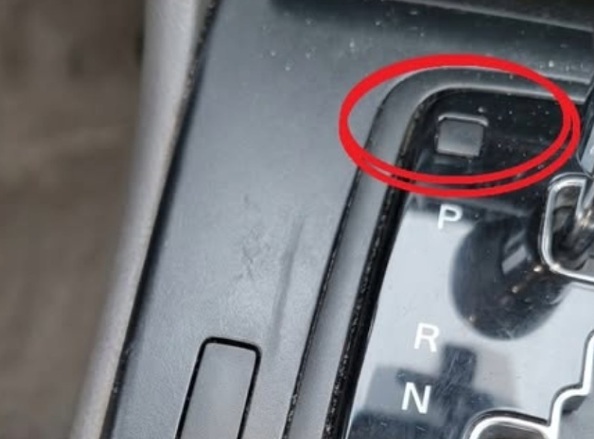
What That Tiny Slot Next to Your Gear Shift Really Does
Modern vehicles are filled with clever design features most drivers never notice—until the moment they need them. From hidden safety mechanisms to emergency overrides, automakers often include small engineering details that quietly solve problems behind the scenes. One such feature is a tiny slot or removable cover located near the gear shift in many automatic vehicles. At first glance, it looks insignificant—perhaps decorative or even accidental. But in reality, this small opening serves a critical purpose that can save drivers from frustrating situations when their vehicle refuses to shift out of park.
Many American drivers encounter this feature without realizing what it does. You might notice it while cleaning your car, while a curious passenger points it out, or during a stressful moment when your vehicle suddenly won’t move. The small slot is known as the shift lock release, and understanding how it works can make a major difference in emergencies involving dead batteries, electrical issues, or malfunctioning brake switches.
You might not realize it, but this tiny component represents an important layer of automotive safety engineering. It’s designed to prevent accidental movement while also providing a manual backup system if the vehicle’s electronics fail. Learning how it works not only makes you a more confident driver but can also help you avoid costly roadside assistance calls or towing services.
In this guide, we’ll explore what the shift lock release actually does, why it exists, when you might need it, and how to use it safely. We’ll also look at the history behind this feature, its importance in modern vehicles, and practical tips every driver should know.
The Hidden Meaning / Significance
The small slot near your gear shift might look like a random piece of plastic or an unused design element, but it actually plays a crucial role in vehicle safety and emergency operation.
A Safety Feature Built Into Automatic Vehicles
Most automatic cars are equipped with a shift lock system, which prevents drivers from moving the gear selector out of “Park” unless certain conditions are met. Typically, the driver must press the brake pedal before shifting into Drive or Reverse.
This safety mechanism helps prevent accidents caused by unintended vehicle movement. For example, without a shift lock system, a parked vehicle could accidentally roll if someone moved the gear lever without pressing the brake.
However, this system relies on electrical components such as:
The brake pedal switch
The vehicle’s battery
The transmission control system
If any of these components fail, the car may become stuck in Park. That’s where the shift lock release comes in. It provides a manual override that allows drivers to move the gear shift even when the electronic system isn’t working.
Why Automakers Include Manual Overrides
Automotive engineers design vehicles with multiple layers of redundancy. While modern cars rely heavily on electronics, manufacturers know electrical systems can fail. Batteries die. Sensors malfunction. Wiring problems occur.
The shift lock release acts as a fail-safe backup system.
Without it, a driver whose battery dies could face several frustrating problems:
The car cannot be moved out of Park
The vehicle blocks a driveway or garage
A tow truck becomes the only solution
By allowing a simple mechanical override, the shift lock release ensures the car can still be moved when necessary.
This design philosophy—building backup systems for critical functions—is common across the automotive industry. According to the National Highway Traffic Safety Administration, safety redundancy is a key principle in modern vehicle design.
A Feature Many Drivers Never Notice
Interestingly, most drivers go years without realizing this feature exists. The slot is often hidden under a small plastic cover or placed discreetly beside the gear shift to maintain the interior’s aesthetic design.
Because it’s rarely needed, drivers may overlook it entirely—until a situation arises where the gear shift won’t move. At that moment, knowing about the shift lock release can feel like discovering a secret function built into your car.
Practical Implications for Drivers and Consumers
Understanding the shift lock release isn’t just a matter of curiosity—it can have real-world benefits for drivers.
Situations Where the Shift Lock Release Is Useful
There are several common situations where this tiny feature becomes extremely helpful.
1. Dead Battery
A dead battery is one of the most common reasons drivers cannot shift out of Park. When the vehicle has no electrical power, the shift lock system cannot disengage automatically.
In these situations, the manual override allows the driver to shift into Neutral so the vehicle can be pushed, jump-started, or loaded onto a tow truck.
According to roadside assistance statistics from AAA, battery issues remain one of the most frequent reasons drivers call for help each year.
2. Malfunctioning Brake Switch
The shift lock system typically requires the brake pedal to be pressed before shifting gears. If the brake light switch fails, the car may not recognize that the brake pedal is pressed—even if it is.
Using the shift lock release can temporarily bypass this problem so the car can be moved safely.
3. Transmission or Electrical Issues
Electrical glitches can sometimes prevent the transmission from unlocking. While these problems require mechanical repair, the shift lock release allows drivers to move the vehicle to a safer location.
Avoiding Unnecessary Towing Costs
Many drivers call roadside assistance when their car refuses to shift out of Park. While this is sometimes necessary, knowing about the shift lock release can save time and money.
A tow truck may charge anywhere from $75 to $150 or more depending on distance. In some cases, simply using the manual override allows the driver to move the car without external help.
This is particularly useful in situations such as:
Moving a car out of a tight parking spot
Rolling a vehicle onto a tow dolly
Repositioning a vehicle in a driveway or garage
Why This Knowledge Matters for Everyday Drivers
Modern vehicles often rely on complex electronic systems. While these systems improve safety and efficiency, they can also create situations where drivers feel helpless when something stops working.
Knowing small details like the shift lock release gives drivers more control over their vehicles.
It’s similar to knowing how to:
Jump-start a battery
Change a tire
Check engine fluids
Each of these basic skills can prevent stressful situations on the road.
Historical / Cultural Context
The shift lock release is closely tied to the evolution of automatic transmissions in modern vehicles.
The Rise of Automatic Transmissions
Automatic transmissions became increasingly popular in the United States during the mid-20th century. Early automatic vehicles offered convenience compared to manual transmissions, but they also introduced new safety challenges.
One concern was accidental vehicle movement. Without safeguards, drivers could accidentally shift gears while parked, causing the car to roll.
To address this, manufacturers developed shift interlock systems that required drivers to press the brake before changing gears.
Today, nearly all modern automatic vehicles include some form of shift interlock.
According to research from the U.S. Department of Transportation, these systems significantly reduced incidents of unintended vehicle movement.
Why Manual Overrides Became Necessary
While electronic safety systems improved vehicle control, engineers quickly realized they created a new problem: what happens when the system fails?
If the electronic interlock malfunctioned, drivers could be completely unable to move their vehicles.
The solution was simple but effective—include a manual override slot that bypasses the electronic lock.
This feature became standard in many automatic vehicles throughout the 1990s and early 2000s.
Changes in Modern Vehicle Design
As car interiors became more digital and minimalistic, the shift lock release became less visible.
Some newer vehicles hide the slot under removable trim pieces or small plastic caps. Others integrate it into the design so subtly that many drivers never notice it.
Vehicles with electronic gear selectors—such as rotary knobs or push-button transmissions—may use different override methods.
However, the underlying concept remains the same: provide a manual backup for electronic systems.
How to Use the Shift Lock Release Safely
If your vehicle’s gear shift becomes stuck in Park, the shift lock release can help you move it. However, it’s important to use it correctly to avoid damaging the vehicle or creating safety hazards.
Step-by-Step Instructions
Although designs vary slightly by vehicle, the general process is similar across many automatic cars.
1. Turn the ignition to the ON position
Even if the engine won’t start, turning the key or pressing the start button can activate certain systems.
2. Apply the parking brake
This is extremely important. Without the parking brake engaged, the car could roll when shifted into Neutral.
3. Locate the shift lock release slot
Look near the gear shift for a small rectangular or circular opening. It may be covered by a removable plastic cap.
4. Remove the cover
Use your car key or a small flat object to gently pry off the cover.
5. Insert a small tool
A key, pen, or small screwdriver can usually fit into the slot.
6. Press down while moving the gear shift
Apply gentle pressure into the slot while simultaneously moving the gear lever out of Park.
Once the shift lock disengages, you should be able to move the shifter into Neutral.
Important Safety Reminder
The shift lock release is intended for temporary use only. If your car requires this override, something in the vehicle’s system likely needs repair.
Driving normally without addressing the underlying issue could lead to further mechanical problems.
Common Mistakes Drivers Make
Because the shift lock release is not widely understood, drivers sometimes misuse it or overlook important safety precautions.
Ignoring the Parking Brake
Failing to engage the parking brake before using the shift lock release can allow the car to roll unexpectedly.
This can be especially dangerous on slopes or in crowded parking areas.
Forcing the Gear Shift
If the gear shift refuses to move, forcing it may damage the transmission or shifter mechanism.
The correct approach is to apply gentle pressure while pressing the release slot.
Using the Override as a Permanent Fix
Some drivers repeatedly rely on the shift lock release without addressing the root problem.
While this may work temporarily, it can mask underlying issues such as:
Faulty brake switches
Electrical system failures
Transmission problems
Ignoring these issues can eventually lead to more expensive repairs.
Tips, Insights, or Takeaways
Knowing how the shift lock release works is helpful, but there are several additional insights that can make vehicle ownership easier and safer.
Read Your Owner’s Manual
Many drivers rarely open their car’s owner manual, but it contains valuable information about emergency features like the shift lock release.
Manuals typically include diagrams showing exactly where the slot is located and how to use it.