Small Yet Essential: Understanding the Hidden Role of Tiny Metal Components
Small Yet Essential: Understanding the Hidden Role of Tiny Metal Components
Posted onMarch 30, 2026 ByadminNo Commentson Small Yet Essential: Understanding the Hidden Role of Tiny Metal Components
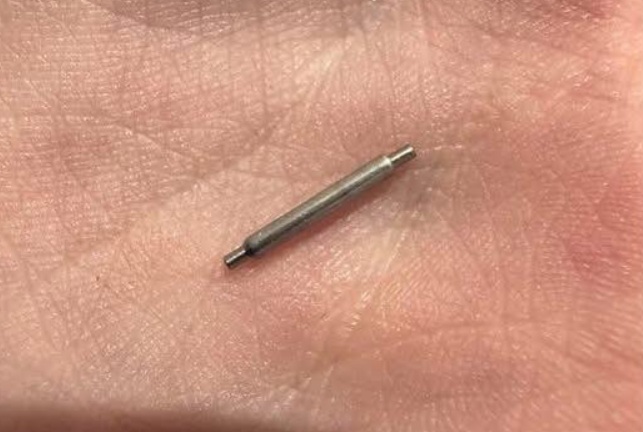
Sometimes, we encounter objects so small and seemingly ordinary that their significance isn’t immediately clear. A minuscule piece of metal—perhaps a pin, clip, bracket, or spring—might appear entirely mundane, lying quietly among other household or industrial items. Its unremarkable size and lack of moving parts can make it easy to overlook, yet these tiny components often perform vital functions that are critical to the operation of larger systems.
Despite their simplicity, these small metal artifacts embody decades of engineering knowledge, precise craftsmanship, and careful material selection. Each component, no matter how small, is designed to withstand stress, ensure safety, or facilitate mechanical function. The story of these unassuming pieces reveals a deep connection between design, functionality, and human ingenuity.
At first glance, a tiny metal piece may seem insignificant, yet its design is anything but simple. Engineers carefully consider every aspect of a small component: its material, shape, size, and strength. Micrometer-level precision is often required to ensure it fits perfectly into a larger assembly, where even the slightest deviation can cause malfunction or failure.
The choice of material is deliberate. Metals such as stainless steel, aluminum, brass, titanium, or specialized alloys are selected based on their durability, resistance to corrosion, thermal properties, and mechanical performance. Even objects that appear identical to the naked eye may have subtle differences, such as surface coatings or hardness levels, tailored to the specific demands of their role.
Some components are fasteners or connectors, responsible for holding larger structures together. A single misplaced pin or bracket can compromise an entire machine, emphasizing how even the smallest pieces are integral to functionality. Other parts serve as guides, alignment tools, or pivots, ensuring complex systems operate smoothly and accurately.
The manufacturing of small metal objects requires meticulous planning and execution. Modern techniques such as CNC machining, laser cutting, and precision stamping allow engineers to produce millions of identical pieces, each adhering to strict specifications. The tolerances are often so fine that a fraction of a millimeter can distinguish a functional part from a defective one.
Even minor imperfections—such as burrs, scratches, or uneven edges—can prevent the component from fitting correctly, interfere with mechanical motion, or compromise structural integrity. That is why quality control is paramount. Each piece is carefully inspected visually, mechanically, or using automated measurement systems to ensure it meets exact standards before being incorporated into a larger system.
The design process often involves extensive testing. Engineers simulate stress, fatigue, and environmental conditions to verify that a component can endure real-world usage over long periods. Micro-springs, tiny brackets, and small locking plates might appear inconsequential, yet they are often engineered to endure repeated stress, extreme temperatures, and high loads without failure.
Small metal components play crucial roles in almost every sector of modern life. In aerospace and aviation, pins, bolts, and brackets must endure extreme vibrations, temperature fluctuations, and high-pressure conditions. A single failure in these tiny components can have catastrophic consequences, so their design, testing, and maintenance are exceptionally rigorous.
In automotive engineering, miniature metal parts help maintain engine performance, suspension integrity, and electrical system reliability. A tiny clip securing a wire harness, a small pivot in a gear mechanism, or a microscopic spring in a locking assembly can all determine whether a vehicle operates safely and efficiently.
Medical devices rely on small metal components in equally critical ways. Surgical instruments, prosthetics, and diagnostic machines utilize pins, plates, and springs crafted to exacting specifications, ensuring patient safety and consistent performance. Even in robotics, tiny metal parts act as linkages, pivots, and connectors, translating motorized motion into precise mechanical actions that allow machines to perform intricate tasks.