How Vanity Items Became Collectible Art
For collectors of vintage beauty accessories, few items capture the imagination quite like antique lipstick cases. These small yet remarkable objects offer more than a place to store cosmetics—they serve as miniature works of art that reflect the elegance, craftsmanship, and social history of their time.
In an era long before disposable plastic tubes became the norm, lipstick cases were designed with intention and style. They were crafted to be admired as much as they were used. A beautifully made case could sit proudly on a vanity table or emerge from a handbag like a piece of jewelry. Many women chose their lipstick case with the same care they used when selecting a brooch, bracelet, or compact mirror.
From the early 1900s through the mid-20th century, lipstick cases evolved alongside fashion trends and cultural shifts. Their designs captured the aesthetics of different eras, from the geometric glamour of Art Deco to the softer, more romantic styles that emerged after World War II.
Today, vintage lipstick cases have become prized collectibles among antique enthusiasts, fashion historians, and beauty lovers. Their appeal lies not only in their visual beauty but also in the stories they tell—stories of craftsmanship, personal style, and the changing role of cosmetics in society.
What once began as a practical vanity item has become something much more meaningful: a collectible piece of design history.
To understand the appeal of vintage lipstick cases, it helps to look at the history of lipstick itself. While forms of lip color existed in ancient civilizations, modern lipstick as we recognize it began gaining popularity in the late 19th and early 20th centuries.
At that time, cosmetics were slowly becoming more socially acceptable for everyday women. In earlier decades, makeup had often been associated with theater performers or considered inappropriate for polite society. However, changing social attitudes, the rise of film stars, and growing consumer culture helped transform cosmetics into fashionable essentials.
Lipstick in particular became a powerful symbol of modern femininity and self-expression. Women carried it with them to reapply throughout the day, making portable containers necessary.
Early lipstick containers were simple metal tubes, but designers soon realized they could transform these everyday objects into beautiful accessories. This realization gave birth to the decorative lipstick case.
When Cosmetics Met Craftsmanship
One of the most remarkable aspects of vintage lipstick cases is the level of craftsmanship that went into their creation.
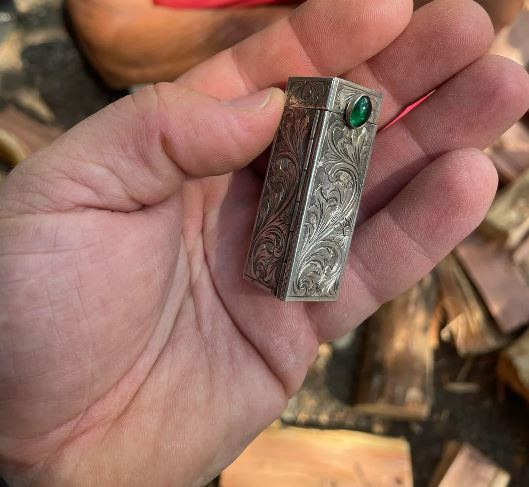
Unlike modern cosmetic packaging, which is often mass-produced from plastic, vintage cases were typically made from durable materials such as brass, sterling silver, or gold plating. Many were created using techniques similar to those used in jewelry making.
Designers treated lipstick cases as decorative objects. They carved intricate patterns into metal surfaces, added colorful enamel coatings, or embedded small stones and crystals.
Some cases were engraved with delicate floral patterns. Others displayed geometric motifs or miniature scenes. Even the smallest design detail was carefully considered.
The result was a functional item that felt luxurious and personal.
Holding one of these cases today can feel like holding a tiny sculpture—an object that reflects both artistic creativity and meticulous workmanship.
Materials That Defined an Era
The materials used to create vintage lipstick cases varied widely depending on the manufacturer, price point, and design style.
Sterling Silver
Sterling silver was one of the most popular materials for high-end lipstick cases. Its smooth, reflective surface allowed for detailed engraving and polishing.
Silver cases often featured intricate patterns, monograms, or delicate filigree work. Over time, the metal developed a subtle patina that added to its vintage charm.
Brass and Gold Plating
Many lipstick cases were crafted from brass and then finished with gold plating. This combination provided durability while giving the object a rich, luxurious appearance.
Gold-toned finishes were especially popular during the 1930s and 1940s, when glamour and elegance were key elements of fashion.
Enamel
Enamel was often used to add vibrant color and decorative patterns. Designers could apply enamel in bold shades or delicate pastels, sometimes forming intricate designs such as flowers, birds, or abstract shapes.
Semi-Precious Stones
Some luxury cases incorporated small decorative stones such as jade, onyx, or turquoise. These stones added visual contrast and elevated the item to the level of fine jewelry.
These materials ensured that lipstick cases were not only beautiful but also durable enough to withstand years of use.
Art Deco Influence in the 1920s and 1930s
During the 1920s and 1930s, the Art Deco movement influenced design across architecture, fashion, and decorative arts. Lipstick cases were no exception.
Art Deco designs often featured:
Bold geometric patterns
Symmetrical shapes
Polished metallic surfaces
Contrasting colors
Streamlined silhouettes
These elements reflected the modern spirit of the era—a time of technological progress, urban growth, and cultural transformation.