Check Your Wallet: Why Some $2 Bills Could Be Worth Far More Than You Think
Check Your Wallet: Why Some $2 Bills Could Be Worth Far More Than You Think
Posted onMarch 5, 2026 ByadminNo Commentson Check Your Wallet: Why Some $2 Bills Could Be Worth Far More Than You Think
For most Americans, paper currency feels routine—something exchanged every day at grocery stores, restaurants, and gas stations. Yet occasionally, an ordinary-looking bill can hold unexpected value. The $2 bill is one of the most fascinating examples.
Although still legal tender in the United States, the $2 bill occupies a curious place in American financial culture. Many people rarely see one, some believe it’s no longer printed, and others treat it as a novelty item. But in certain cases, a $2 bill can be worth far more than its face value to collectors.
Understanding why requires a closer look at the history of the denomination, the characteristics collectors search for, and the economic forces that drive the rare currency market. Whether you’re interested in collectible currency, rare U.S. banknotes, or simply curious about what might be hiding in your wallet, the $2 bill offers a surprising lesson in American financial history.
The Hidden Meaning / Significance
Why the $2 Bill Fascinates Americans
Few pieces of American currency carry as much mystique as the $2 bill. Unlike commonly circulated bills such as $1, $5, or $20 denominations, the $2 bill appears infrequently in everyday transactions. This rarity has fueled decades of myths and misconceptions.
In reality, the $2 bill remains part of the U.S. monetary system and continues to be printed periodically by the Bureau of Engraving and Printing, a division of the U.S. Department of the Treasury. However, its low demand means that fewer are produced compared with other denominations.
Because people encounter them so rarely, many assume they are discontinued or rare collectibles by default. Ironically, this belief causes people to save them rather than spend them—making them circulate even less.
You might not realize that this simple behavioral pattern has helped transform the $2 bill from ordinary currency into an object of curiosity and collectible interest.
Symbolism in American Currency
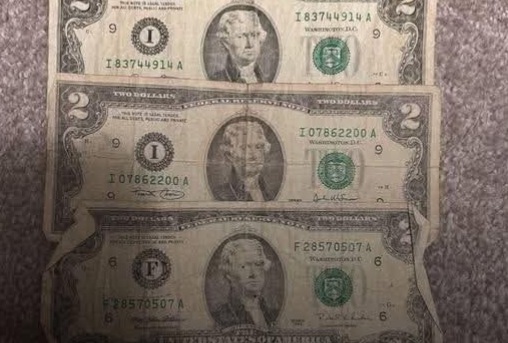
The $2 bill also carries symbolic significance. The modern design features Thomas Jefferson, the third president of the United States, on the front and a depiction of the signing of the Declaration of Independence on the reverse. This artwork is based on John Trumbull’s famous painting housed in the U.S. Capitol Rotunda.
Because Jefferson played such a central role in American independence, the bill quietly celebrates a foundational moment in U.S. history. For collectors and historians, this historical connection adds cultural depth beyond the bill’s monetary value.
Scarcity vs. Perceived Rarity
A key factor driving interest in the $2 bill is the difference between actual scarcity and perceived rarity.
While millions of $2 bills exist, their limited circulation means most Americans rarely encounter them. This creates the illusion that they are scarce. In reality, only certain types—such as older series, unusual serial numbers, or printing errors—are genuinely rare.
The psychology behind perceived rarity plays a major role in collectible markets, from numismatics (coin collecting) to rare stamps and vintage trading cards. The $2 bill sits squarely within this phenomenon.
Practical Implications for People, Consumers, and Businesses
How to Tell if a $2 Bill Is Valuable
If you find a $2 bill tucked away in a drawer, wallet, or old envelope, it’s worth examining it carefully before spending it. Several characteristics determine whether a bill might interest collectors.
Check the Series Year
The series year printed on the bill indicates when its design was issued. While many modern bills date from 1976 onward, earlier series can be significantly more valuable.