A Remarkable Bird Sighting in Texas Sparks Curiosity Among Scientists and Nature Enthusiasts
In late December, reports from the southern tip of Texas began circulating among wildlife observers, hikers, and local residents. The region near the Rio Grande River, close to the city of Brownsville, is well known for its rich biodiversity. Birdwatchers from across the country travel there to catch glimpses of rare species, migratory birds, and unique ecosystems that thrive in the borderland environment. Yet even in a place famous for unusual wildlife encounters, the story that began to unfold surprised nearly everyone who heard it.
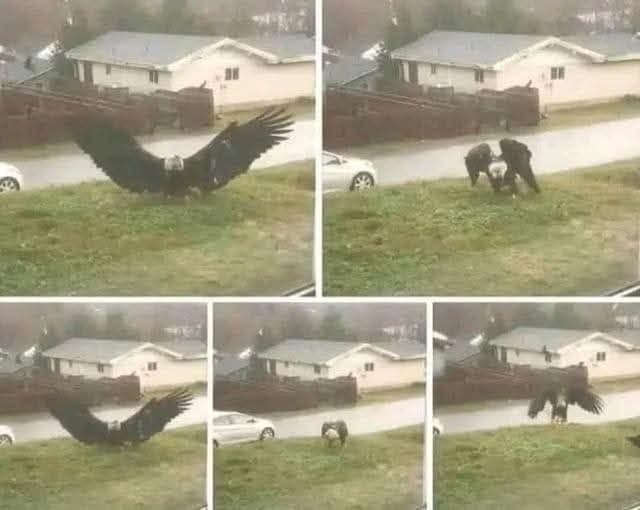
Several independent witnesses described seeing what appeared to be an exceptionally large bird of prey flying above the landscape. The reports were consistent enough to draw the attention of wildlife officials and ornithologists who study birds professionally. People described a raptor with a wingspan that seemed far larger than those of species typically found in the region. Some observers said the bird glided high above fields and waterways, while others reported seeing it perched in distant trees.
Although unusual wildlife sightings are not uncommon in areas with rich ecosystems, the size described by witnesses immediately sparked curiosity. Experienced birdwatchers noted that even the largest birds normally found in the region rarely reach the dimensions that people were describing. Because of this, the reports quickly moved beyond casual conversation and into the realm of scientific inquiry.
Researchers did not jump to conclusions. Instead, they approached the situation carefully, following standard wildlife investigation practices. Their goal was not to prove extraordinary claims but to gather reliable evidence and determine whether the sightings could be explained through known species, natural variation, or simple misidentification.
The story that followed became a fascinating example of how science handles unusual observations in the natural world.
To understand why this sighting generated so much attention, it helps to look at the environment where it occurred. The lower Rio Grande Valley is widely considered one of the most ecologically diverse regions in North America. The area contains wetlands, river systems, coastal plains, farmland, and patches of protected wilderness that support a remarkable variety of plant and animal life.
Birdwatchers often visit wildlife refuges in the region because many species appear there that cannot easily be found elsewhere in the United States. The proximity to Mexico also means that some birds typically associated with tropical climates occasionally cross into the area.
Because of this rich biodiversity, researchers are accustomed to surprising discoveries. New bird records are added to local checklists regularly, and migrating species sometimes appear far outside their normal ranges. Still, even seasoned observers were intrigued by the descriptions of a bird whose wingspan seemed unusually large.
Many of the reports came from people who spend significant time outdoors. Some were hikers exploring nature trails, while others were residents familiar with the birds that typically fly over local farmland. Their accounts described a bird that appeared larger than familiar raptors such as the Bald Eagle or the California Condor.
Those species are already among the largest birds commonly discussed in North America, so hearing descriptions that suggested something even bigger naturally attracted attention.
Early Witness Accounts
The first reports were shared informally through local nature groups and community discussions. Witnesses described seeing a bird soaring high above fields or near the river corridor. A few individuals said the bird appeared to glide effortlessly with wings stretched wide, casting a noticeable shadow below.
Others described the bird perched on distant trees or structures, where its silhouette seemed unusually large compared with nearby birds. While most observers could not provide exact measurements, they repeatedly emphasized the bird’s impressive wingspan.
What made the reports noteworthy was their consistency. Although the sightings occurred on different days and at different locations around the region, the descriptions shared several similarities.
A large bird of prey silhouette
Long wings suited for soaring flight
Slow, powerful wingbeats when it moved
A wingspan that appeared larger than familiar raptors
None of the witnesses claimed to know exactly what species the bird might be. Instead, they simply reported what they had seen.
In wildlife research, such reports are treated as preliminary observations. Scientists recognize that human perception can sometimes be misleading, especially when estimating size or distance in the sky. For that reason, early accounts are used primarily as a starting point for further investigation rather than as definitive evidence.